Magic Knights#13

You have chess knights, and you want to place them on a certain number of chessboards of size n \times n in such a way that no pair of knights is attacking each other.
Because you are a very economical person, you are interested in the minimum number of chessboards of size n \times n that need to be purchased in order to accommodate at least chess knights in total.
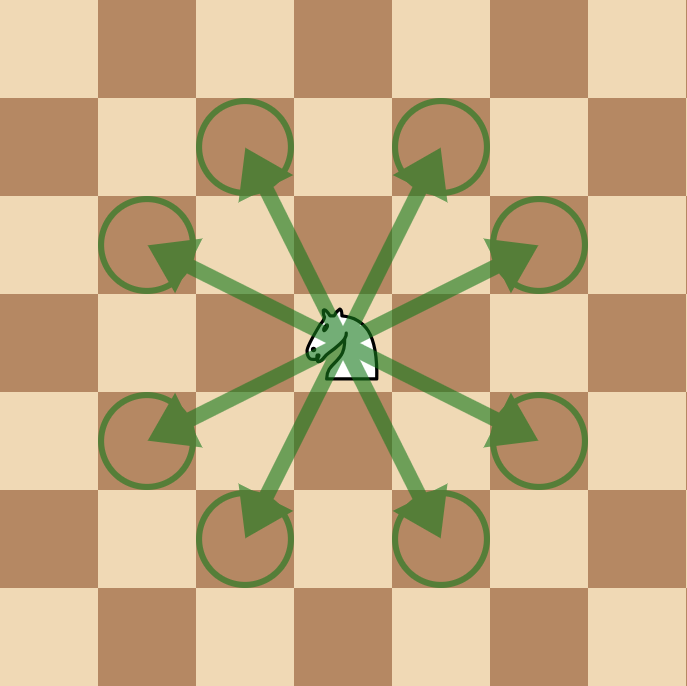
A chess knight is a piece that can move in the following way in one move:
The first line contains two integers , (1 \le n \le 10^{9}, 1 \le k \le 10^{18}).
Output a single number in one line — the answer to the problem.
Example
Example 1
Example 2
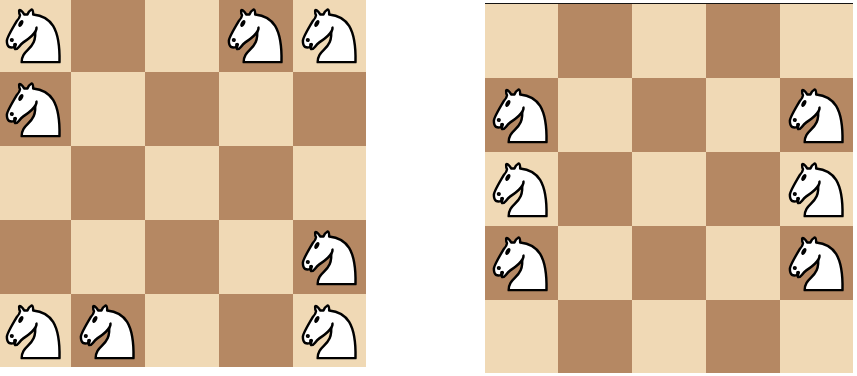
An example of one of the optimal knight placements in the first test:
In this problem, there are conditional blocks. If your solution works correctly for certain constraints, it will receive a certain number of points. Note that the evaluation is still in testing.
( points): n\le 5,k \le 20;
( points): n,k \le 10^6;
( points): n, k \le 10^9;
( points): without additional constraints.